For more than two decades, this modest wooden bungalow perched on tall pilings stood defiantly over the waters of Napeague Harbor in Amagansett, a quiet corner of East Hampton Town. Often called the “shack on stilts” or simply the stilt house, it became one of the most photographed and quietly cherished landmarks on eastern Long Island. Its silhouette against the bay, framed by endless sky and shifting tides, captured the imagination of locals, visitors, photographers, and passersby who discovered it at the end of Mulford Lane.
The structure was originally built as a simple summer bungalow in the 1950s or 1960s, during Lazy Point’s heyday as a working-class fishing community known as the “Promised Land.” Back then, the shoreline was solid beachfront, and the house sat comfortably on the sand. But relentless coastal erosion changed everything. The north-facing shore of Lazy Point has long been vulnerable to winter storms, nor’easters, and the slow retreat of the land. Decades ago, groins constructed farther east along the beach disrupted natural sand flow, accelerating the loss here. Year by year, the water crept closer until the house was entirely surrounded, eventually left marooned about 30 feet offshore on its sturdy wooden pilings. Those pilings became its only lifeline, lifting it above the lapping waves and turning it into a ghostly sentinel over Gardiners Bay.
Abandoned for years, the house took on an almost mythical quality. It appeared in countless Instagram posts, drone shots, and local stories as a symbol of impermanence, a reminder that even the most steadfast structures eventually yield to nature. People spoke of it with affection, as a relic of a simpler Hamptons era before luxury estates dominated the landscape. It represented the old Lazy Point spirit: unpretentious, resilient, tied to the water and the seasons.
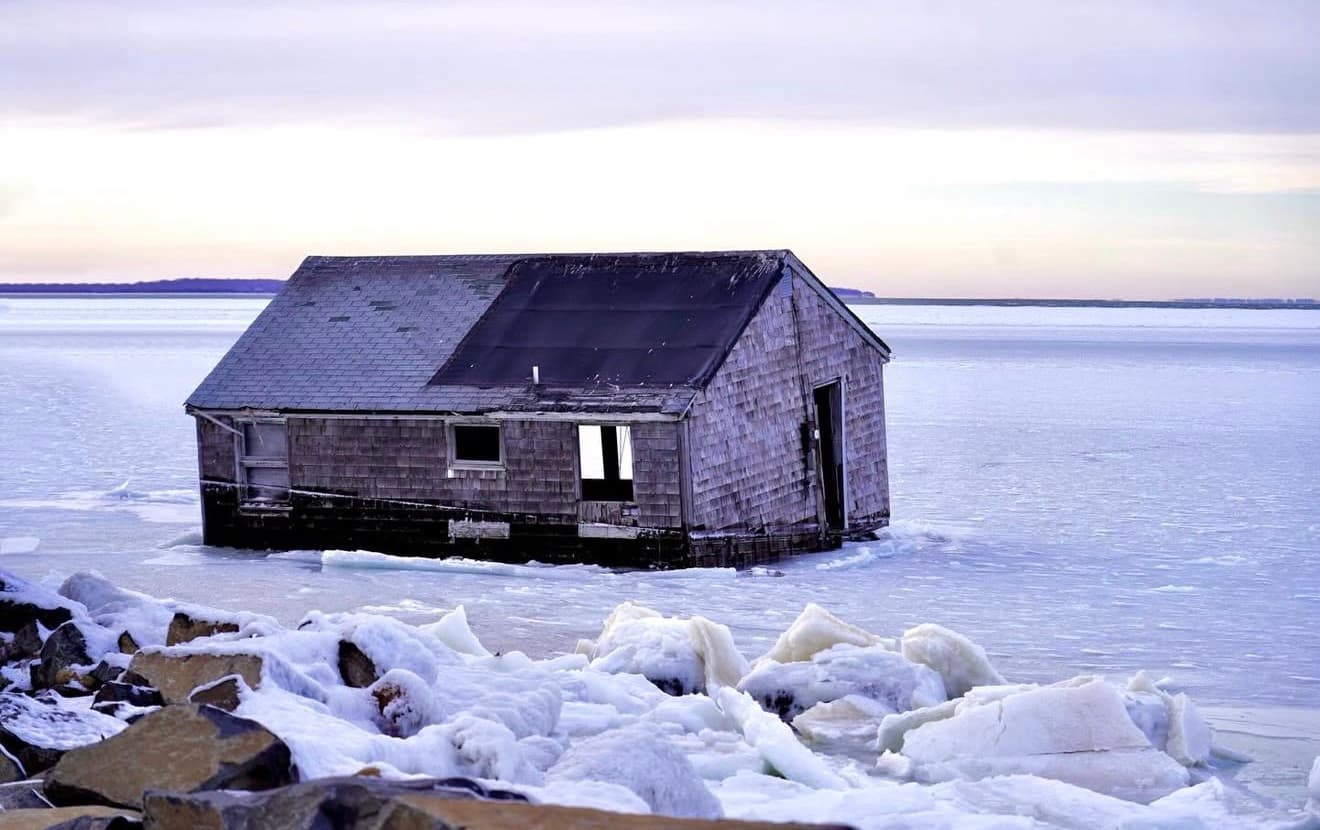
That era ended on Saturday night, January 31, 2026. During a prolonged cold snap, ice floes formed in the harbor and battered the aging pilings. The wooden supports, weakened by decades of exposure to salt, freeze-thaw cycles, and constant wave action, finally gave way. The shingled structure toppled into the icy water, partially submerging and coming to rest amid broken pilings and frozen slush. Aerial photos from the following days show the wreckage half-sunk, a poignant contrast to the upright figure it cut for so long.
Town officials now face decisions about cleanup, potential hazards, and questions of ownership over what is now submerged debris. For many who knew the spot, however, the loss feels more personal. It marks the close of a chapter in Lazy Point’s history, a quiet acknowledgment that the forces shaping the coastline wait for no one. The stilt house held on longer than anyone expected, a stubborn holdout against erosion and time. In its final years, it stood as a haunting, beautiful testament to both human ingenuity and nature’s inevitability. Now reclaimed by the bay it overlooked, it leaves behind memories, photographs, and a certain melancholy beauty in its absence.
Lazy Point endures, but one of its most distinctive features is gone. Nature has the last word, as it always does along these shores.